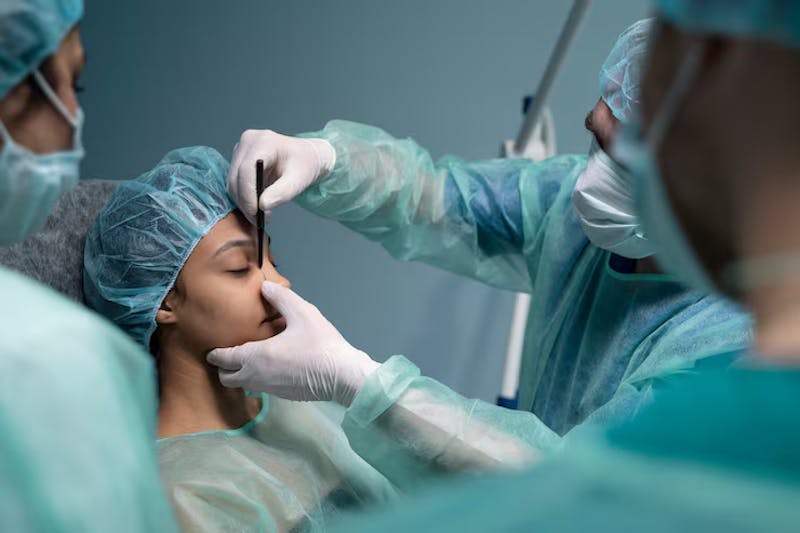
Most people spend more time researching a new phone than they do vetting the surgeon who will permanently reshape their face. That gap is a problem. Rhinoplasty outcomes live with you for decades, and the margin for error is genuinely small. A poor result does not just affect how you look in photos. It affects how you breathe, how you feel stepping into a room, and, in some cases, how many additional surgeries you will need to undo what went wrong.
It is worth knowing the difference between a real, qualified surgeon and a well-marketed one before entrusting anyone with such a responsibility. The best rhinoplasty surgeon in Beverly Hills is not necessarily the one with the largest ad budget or the most celebrities on their list.
1. Board Certification and Specialized Training
Start here, every time. In the U.S., surgeons performing rhinoplasty are typically members of the American Board of Plastic Surgery or the American Board of Otolaryngology, which includes ENT and head and neck surgery. Both are legitimate routes. They are not necessarily superior to each other.
It is more important in fellowship training. Other surgeons pursue additional training following residency, spending an additional year or two in facial plastic and reconstructive surgery. The judgment is sharper than at that time in terms of facial structure, ethnic preservation, and the subtle decision-making that makes the difference between clean and unfortunate outcomes.
The direct questions to be asked are:
- What board certified you, and when?
- Have you completed a fellowship in facial plastic surgery?
- What is your percentage of surgical caseload for rhinoplasty?
Ambiguous or evasive answers to these questions are worth noting. A surgeon who is confident in his training will not find it difficult to explain it.
2. Pre- and Post-Portfolio Review
Portfolios test claims. Each surgeon will consider themselves patient-oriented and detail-oriented. The photographs either affirm that or not.
Look for variety first. A series of noses, all similar to one another, suggests a surgeon with a personal aesthetic, rather than one who builds a plan around the individual patient. Good portfolios include patients with wide bridges, thick skin, dorsal humps, bulbous ends, and other ethnicities. All the results should seem to belong to that specific person.
Pay attention to:
- Lighting and angle consistency between pre- and post-shots.
- The distance of the post-operative photos. Preliminary results hide edema and do not provide the full picture.
- The similarity of the cases presented to your own nose type and what you are hoping to change.
- Natural proportions and results that seem to be worked on visually.
Should the gallery on their site be chosen to show only perfect candidates, or ask to see more cases? They will have any surgeon who does good, steady work.
3. Surgical Technique Expertise: Closed vs. Open Rhinoplasty
Two approaches are available, and understanding the difference will help you determine whether a surgeon is developing a plan based on your anatomy or relying on what he is most comfortable with.
In open rhinoplasty, a small incision is made on the columella, the thin strip of tissue between your nostrils. It gives the surgeon a clear picture of the nasal structure. Closed rhinoplasty, also known as scarless rhinoplasty, leaves all incisions in the nostrils. No external scar, less recovery in most cases and less disturbance to surrounding tissue.
Closed rhinoplasty is better suited to patients who need less serious corrections. Open is typically preferable when the anatomy is complex, structural grafting is required, or revision surgery is involved.
A surgeon who orders the same operation for all patients regardless of anatomy is a concern. The approach should be anatomical and not vice versa. When a surgeon explains his or her recommendation by some reasoning that is connected with your case, it is a good sign that he or she is actually thinking it through.
4. Rhinoplasty Revision Experience
This is the one that gets skipped more than it ought to. Revision rhinoplasty, or the process of repairing or improving a nose job, is typically considered the most difficult of all the facial surgeries that exist. Scar tissue, collapsed structures, and asymmetry resulting from prior work are some of the issues that a surgeon who has only performed primary rhinoplasty might not have encountered.
A surgeon who has done revisions regularly has gone through what can go wrong and how to navigate it. The experience is carried over to all the major procedures they undergo.
Direct question: Do you perform revision rhinoplasty? How often? What are the most common issues you correct? A surgeon who has never performed a revision case may be a gifted individual, but one who does so regularly will arrive at the table with a higher level of preparedness.
5. Patient Reviews and the Consultation Experience
The most positive aspect of reviews is that you must read past the star rating. Find trends in patient descriptions. Does the surgeon have multiple reviews where he was rushed or hard to reach after surgery? Are some of them that the results had no similarity to what was discussed? Those tendencies are more eloquent than a single glowing testimonial.
The consultation process itself will probably be the most revealing part of the entire process. Show whether the surgeon is listening or is just waiting to speak. Show whether they are truthful in describing limitations or present everything in the best possible light.
Green flags worth noticing:
- They ask what you want to achieve and then provide you with advice.
- They show where your expectations may not be consistent with what is anatomically possible.
- They are strolling through dangers and healing in reality, not hollow threats.
- They do not find your questions inconvenient.
Red flags to watch out for:
- They agree to everything you want without any reason.
- It is a rushed discussion or a sales pitch under time constraints.
- The complications and revision rates are either swept under the carpet or not mentioned at all.
- They do not make any promises about the specific results to expect in reality.
A surgeon who draws away what you desire is not discouraging. They are being honest. That candor will be what saves you when the bandages are taken off.
6. Facility Accreditation and Hospital Privileges
The place of a surgeon is not a trifle. Certified surgical centers adhere to the established safety standards of equipment, staffing, and emergency procedures. That is one of the questions to be asked when a surgeon is performing procedures in a non-accredited office.
Hospital privileges are also educational. When a hospital grants a surgeon privileges, it means that an independent institution has reviewed the surgeon's credentials, training, and track record and has admitted him to practice at that hospital. It is a weighty external check.
Ask where your procedure is taking place. Ask about the accreditation of the facility and the active hospital privileges of the surgeon. You are to find a plain answer.
7. Open Pricing and No Pressure Sales Strategy
The question of price, and any surgeon worth seeing, will be open on the point. The cost of a full rhinoplasty should include the surgeon, anesthesia, facility, and post-surgery care. Estimates or charges that are not clear and keep changing are a red flag.
The figure is not as significant as the dynamic around it. Other practices use limited-time pricing, urgency language, or heavy discounting to pressure patients into making quick decisions. That pressure is a tactic, not a measure of value. Surgical decisions to get a deal are rarely made well.
You do not have to be coerced by a self-assured surgeon who has a good track record. Their results do the convincing. When a consultation is more of a sales pitch than a doctor-patient conversation, then you have learned something important about how that practice is conducted.
Slow Down and Select Wisely
Rhinoplasty is not a decision that should be made quickly or based on surface-level impressions. The surgeon you choose will shape not only your appearance but also your confidence and daily experience for years to come. Taking the time to ask detailed questions, review consistent results, and understand how each surgeon thinks will give you a clearer picture of who is truly qualified. When you compare consultations and pay attention to both communication and outcomes, the right choice becomes far more evident and grounded in substance.
At Scarless Nose, Dr. Dugar believes this level of care and precision is exactly what patients deserve. We focus exclusively on refined, natural-looking results using advanced closed, scarless rhinoplasty techniques that avoid external incisions. Our approach is thoughtful, individualized, and rooted in a deep understanding of facial balance. We take pride in offering both surgical and non-surgical options with a commitment to honesty, detail, and consistency, positioning ourselves among the leading destinations for patients seeking subtle and sophisticated nasal refinement.