
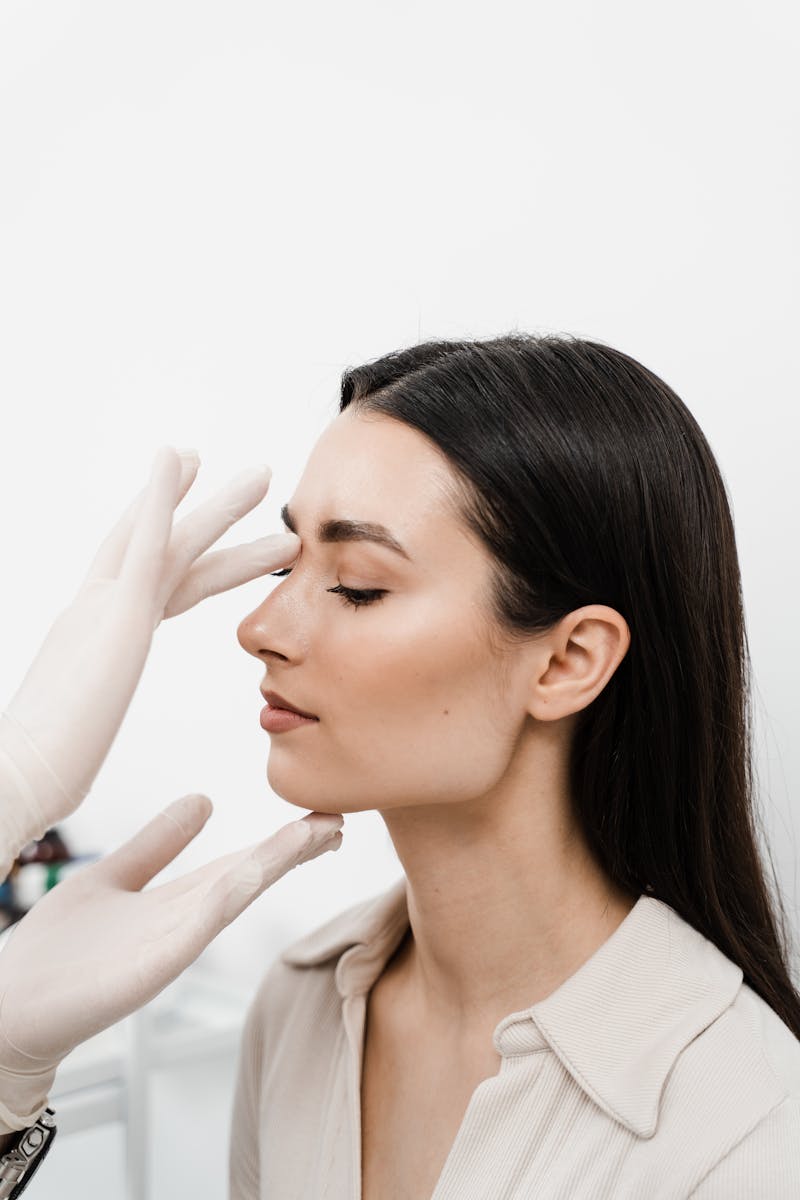
Rhinoplasty, commonly called a “nose job”, is one of the most requested cosmetic surgeries in the United States. Yet one of the most common questions patients and parents ask is simple: Is there a right age for rhinoplasty?
The short answer: there is no single universal “best age,” but age does matter, and it matters in specific, medically important ways. The ideal timing for rhinoplasty depends on nasal development, physical health, emotional maturity, and individual goals. Understanding how each of these factors intersects with age is essential to making an informed decision.
Why Age Matters in Rhinoplasty
The nose is not a static structure. It grows and changes throughout childhood and adolescence, and continues to shift subtly with age into adulthood and beyond. Performing rhinoplasty before the nose has fully developed can compromise surgical outcomes and lead to complications that require revision surgery.
Age also intersects with skin quality, healing ability, and psychological readiness, all of which directly affect surgical results. A board-certified plastic surgeon like Dr. Deepak Dugar will evaluate all of these variables, and not just a number on a calendar.
Dr. Dugar's approach is preservation-based. He wants to protect the nasal structure, vascular integrity, and soft-tissue balance whenever possible. His philosophy of rhinoplasty surgery is not an act of replacement, but of refinement. What is strong is preserved. What is excessive is reduced with restraint.
The Minimum Age for Rhinoplasty: When Is the Nose Fully Developed?
Nasal development generally concludes around age 15–16 in girls and 16–17 in boys, though individual variation exists. Operating before the nose reaches skeletal maturity risks disrupting ongoing growth, potentially altering the final outcome unpredictably.
The American Society of Plastic Surgeons (ASPS) advises that candidates for rhinoplasty should have a fully developed nasal structure before proceeding. Dr. Dugar typically confirms developmental readiness through a physical examination and a thorough review of the patient’s growth history during a consultation for nose surgery.
Rhinoplasty for Teenagers
Teen rhinoplasty is performed, but it requires careful evaluation. Beyond physical readiness, oftentimes emotional maturity and the patient’s motivations for seeking surgery are assessed. The procedure should be driven by the patient’s own goals, not external pressure from peers, social media, or others.
Functional rhinoplasty, surgery to correct a deviated septum or structural breathing obstruction, may be appropriate at a younger age when it is medically indicated. Cosmetic rhinoplasty, however, typically warrants waiting until development is complete.
Key considerations for teenage rhinoplasty candidates:
- Physical nasal development is confirmed as complete
- The teen has a clear, stable understanding of their goals
- Motivations are internal, not driven by social pressure or unrealistic ideals
- Parents or guardians are involved and supportive of an informed process
- A qualified surgeon conducts a thorough psychological and physical assessment
Rhinoplasty in Your 20s and 30s: The Peak Window
For most patients, the late teens through the 30s represent the period most surgeons consider optimal for rhinoplasty. The nose is fully developed, skin elasticity is strong, and healing capacity is generally at its best. Patients in this age range tend to have realistic expectations, stable anatomy, and the physical resilience to support a smooth recovery.
The 20s and 30s also tend to be a time of significant personal and professional development, and many patients choose this window to address longstanding concerns about nasal appearance or function that affect their confidence.
That said, candidacy is never determined by age alone. Health history, nasal anatomy, skin type, and surgical goals all weigh equally in the evaluation process.
Rhinoplasty in Your 40s, 50s, and Beyond: What Changes?
There is no upper age limit for rhinoplasty. Many patients in their 40s, 50s, and older are excellent candidates and achieve outstanding results. However, there are physiological factors that Dr. Dugar may account for when evaluating older patients.
Skin Quality and Healing Considerations
As the skin ages, it loses some of its natural elasticity and collagen density. Thinner or less pliable skin may not drape as smoothly over the reshaped cartilage and bone, which can affect how surgical refinements appear post-operatively.
Healing can also take slightly longer with age, and the risk of bruising or swelling persisting beyond the typical recovery window may be modestly higher. For patients who are otherwise in good health, these factors are manageable and rarely disqualifying.
Combining Rhinoplasty with Other Procedures
Patients in midlife and beyond sometimes choose to combine rhinoplasty with complementary facial procedures, such as a facelift, brow lift, or eyelid surgery, for a more comprehensive aesthetic outcome. Combining procedures requires careful surgical planning and an honest discussion of recovery expectations.
Any patient considering rhinoplasty at an older age should undergo a thorough medical evaluation, as underlying health conditions that affect healing, anesthesia tolerance, or clotting must be assessed before proceeding.
Emotional and Psychological Readiness at Any Age
At every age, psychological readiness is as important as physical readiness. Rhinoplasty produces permanent changes to a defining facial feature. The decision should be grounded in well-reasoned personal motivations, realistic expectations, and a stable emotional state.
Dr. Dugar will take time during the consultation to understand why you want rhinoplasty, what outcomes you’re expecting, and whether those expectations align with what surgery can realistically achieve. This conversation is not a formality; it is a critical part of ensuring long-term satisfaction.
Patients who approach rhinoplasty with specific, achievable goals and an understanding of the recovery process consistently report higher satisfaction than those motivated by vague dissatisfaction or unrealistic ideals.
What Actually Determines the Right Age for Rhinoplasty?
Rather than a fixed number, the right time for rhinoplasty is the intersection of several key factors:
- Completed nasal development
- Good overall physical health with no contraindicated conditions
- Strong skin elasticity and healing capacity
- Clear, personal motivations, not external pressure
- Realistic expectations of what rhinoplasty can and cannot achieve
- Willingness to commit to a full recovery process
The best way to determine whether the timing is right for you is to consult a board-certified plastic surgeon specializing in rhinoplasty, such as Dr. Deepak Dugar. A thorough evaluation of your anatomy, health history, and goals will provide a far more accurate picture than any generalized age guideline.
Frequently Asked Questions About Rhinoplasty and Age
What is the minimum age for rhinoplasty?
It is recommended to wait until the nose is fully developed, which typically occurs around age 15–16 for girls and 16–17 for boys. Functional rhinoplasty for a breathing obstruction may be considered earlier if medically necessary.
Is there an age limit for rhinoplasty?
There is no absolute upper age limit. Patients in their 50s, 60s, and beyond may be excellent candidates when they are in good health and have realistic expectations. Age-related changes in skin quality and healing are evaluated individually.
Can a 16-year-old get a rhinoplasty?
Potentially, yes, if the nose is fully developed and the patient demonstrates emotional maturity and self-motivated goals. Parental consent is required for patients under 18, and a thorough psychological and physical evaluation is essential.
Does rhinoplasty look different on older patients?
Results can vary based on skin quality and elasticity, both of which change with age. Dr. Dugar will adapt his technique for older patients to achieve the most natural and proportionate outcome possible, given each patient’s anatomy.
Is rhinoplasty safe for patients over 50?
Yes, with appropriate medical clearance. Patients over 50 in good general health with no contraindications typically undergo rhinoplasty safely. Dr. Dugar will review your full medical history before recommending surgery.
What is the best age for rhinoplasty for most patients?
From a physical standpoint, the late teens through the 30s are considered by many surgeons to represent an optimal window, the nose is mature, the skin is elastic, and healing is efficient. However, individual factors always take priority over generalized age recommendations.
The Bottom Line
Age is an important variable in rhinoplasty, but it is one factor among many, not the sole determining one. Whether you’re a teenager whose nose has just finished developing, someone in your 30s addressing a longstanding concern, or a patient in their 50s seeking a facial refinement, the right age for rhinoplasty is the age at which you are physically ready, emotionally prepared, and working with a surgeon whose expertise you trust.
Board-certified plastic surgeons like Dr. Deepak Dugar will help you assess all of these dimensions together. If you’re considering rhinoplasty, schedule a consultation to discuss your specific anatomy, goals, and timeline because the best decision is always an informed one.
Sources:
American Society of Plastic Surgeons – Rhinoplasty Statistics and Guidance
American Academy of Facial Plastic and Reconstructive Surgery – Rhinoplasty Overview
Dr. Deepak Dugar – Publications and Articles