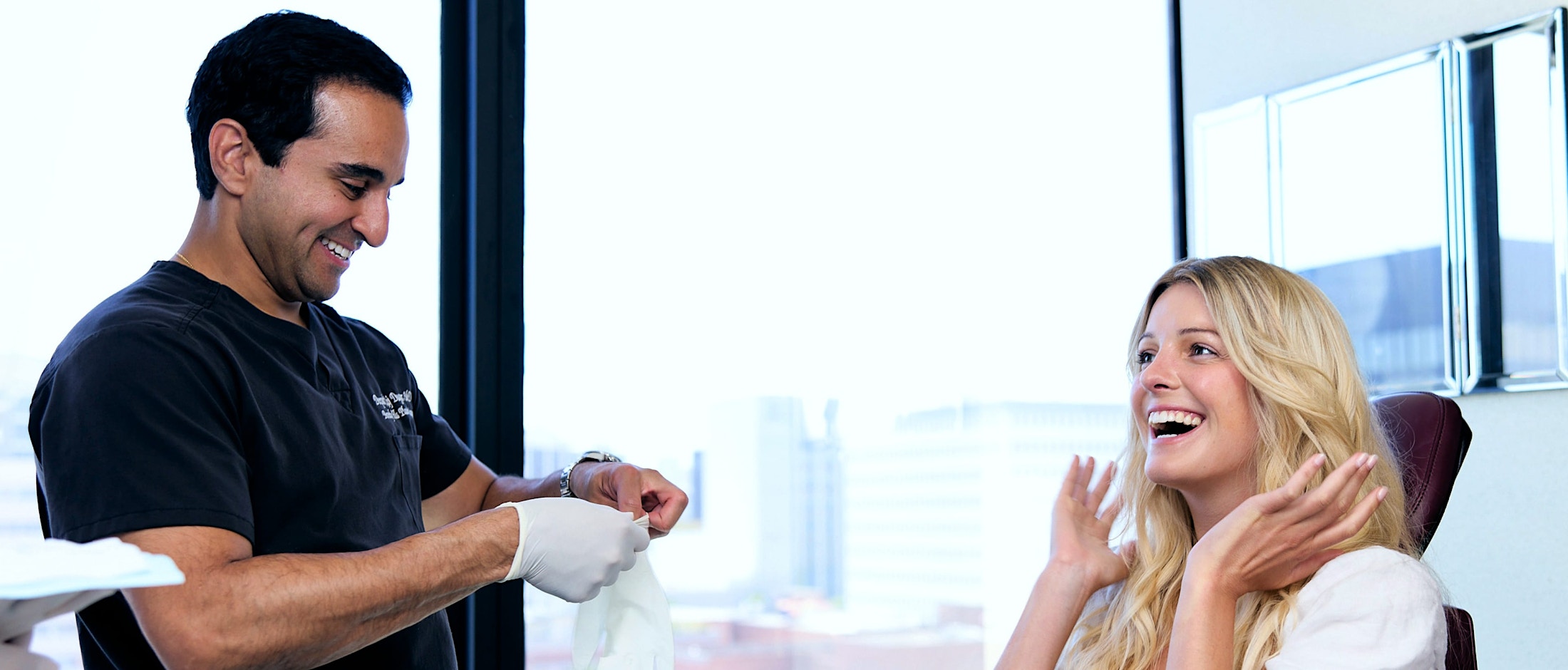

Walking into a rhinoplasty consultation for the first time feels uncomfortable for most people.
You are sitting across from a stranger, talking about something deeply personal, and trying to figure out whether this person is actually as good as their website suggests. That mix of hope, vulnerability, and uncertainty is completely normal. The best way to manage it is preparation.
Knowing what happens in that room, what a good surgeon looks for, what questions you should be asking, and what answers should reassure you rather than concern you changes the entire dynamic. Instead of hoping the surgeon is the right fit, you will actually be able to tell. Finding the best rhinoplasty surgeon in Beverly Hills starts long before any procedure is scheduled. It starts in that first conversation.
What Top Rhinoplasty Surgeons Actually Evaluate During a Consultation
A thorough surgeon does not just look at the part of your nose you want changed. They evaluate the entire picture because the nose does not exist in isolation on your face.
Here is what a quality assessment covers:
Nasal anatomy and structural integrity.
The surgeon examines your nasal bones, cartilage, tip projection, and bridge height, and how these components relate to one another. What may seem like a simple hump removal on the surface may involve several structural adjustments to provide balance.
Balance and symmetry of the face.
Your nose should fit your face, not what somebody thinks a perfect nose should be. Before making any recommendations, a surgeon you can trust will assess your chin projection, forehead, and overall facial thirds. What seems good in itself might seem bad when the whole face is considered.
Breathing function.
This is the point at which most consultations fail. A large percentage of patients do not undergo rhinoplasty as a cosmetic surgery. A deviated septum, collapsed nasal valves, or hypertrophic turbinates can influence airflow. A surgeon who fails to even mention breathing during a cosmetic consultation is not seeing the whole picture.
Skin type and thickness.
The skin behaves differently on a reformed structure depending on its thickness and elasticity. Thick skin conceals fine detail work. Very thin skin exposes all the irregularities. An honest surgeon will tell you what your skin type will do to your realistic outcome before you ever put your signature on anything.
Questions to pose to your surgeon.
The consultation is a two-way communication. A surgeon who makes you feel you should ask questions is already demonstrating something worth knowing. Take some questions in your mind and hear how they are answered, not what is said.
Questions that matter:
- How many rhinoplasty operations do you do each year, and how many years have you been doing them?
- Do you perform open and closed rhinoplasty? What would you recommend in my case, and why?
- What is your personal revision rate, and under what circumstances would a revision be necessary?
- What is the name of the anesthesiologist, and is he or she a board-certified anesthesiologist or CRNA?
- How does recovery actually look week by week, and when will I be able to see close-to-final results?
- Have you dealt with patients of the same anatomy or ethnicity as mine?
The latter question is more significant than it may seem. When surgeons are accustomed to working with a diverse patient population, they come to appreciate the beauty of preserving ethnic features rather than removing them. When a surgeon seems to be surprised by the question, that is something to have.
Understanding Your Personalized Treatment Plan.
A personalized treatment plan is not a printout with your name on the top. It is a factual account of what your specific anatomy needs, why certain techniques are suited to your case, and what the trade-offs are among techniques.
Many surgeons have adopted digital imaging as a routine to give patients a visual impression of what can occur. This can be useful, but there is a caveat to keep in mind. Online previews are not guarantees, but simulations. A surgeon who sells imaging as a promise of results rather than a planning device is selling more than the technology can deliver.
A good treatment plan discussion example:
- The surgeon explains to you what they plan to do and why each change is in your best interest.
- They take you through which method they will employ and what it will do for your recovery.
- They are specific about what the surgery can actually do, given your anatomy.
- They talk about what the surgery will not change, and you do not need to ask.
The latter is what patients will recall. Surgeons who are truthful about constraints during preoperative consultations tend to have patients who are likely to be informed and satisfied with the surgical results, even when the results are not completely satisfactory.
Green Flags vs. Red Flags during a Rhinoplasty Consultation.
Here is where your gut and your observations have to work together.
Green flags:
- The surgeon will take time to examine your face and then inform you what they would change.
- They ask what bothers you rather than beginning with what they see.
- Risks, recovery, and realistic timelines are talked about without you pushing to get them.
- They give examples of cases in which they advised a patient against surgery because it was not the right choice.
- The office staff is courteous, responsive, and not coercive to book a reservation.
Red flags:
- The consultation is brief, rushed, or a formality before the sales discussion.
- The surgeon is pleased to do whatever you want, including procedures that do not fit your anatomy.
- The pressure of pricing, limited-time offers, or urgency language may be located anywhere in the conversation.
- You will not get a straight answer to the question of who does the anesthesia or where it is done.
- Before-and-after pictures are heavily filtered or not dated after surgery.
One of the red flags that are often ignored: a surgeon who never mentions anything that the surgery cannot do. No process can give it all. A surgeon who promises to do rhinoplasty as a panacea without conditions is either lying or not hearing your specific case.
See More Than One Surgeon Before You Decide.
Seeing more than one surgeon before making your decision is not optional. It is a necessary step in making an informed and confident choice. A single consultation, no matter how impressive it may seem, does not provide enough perspective to evaluate something as permanent as your facial structure. When you meet multiple surgeons, you begin to notice differences in communication, attention to detail, and the thoroughness with which your concerns are addressed. This comparison allows you to move beyond first impressions and focus on substance.
At Scarless Nose, we respect and encourage this level of diligence because we are confident in the experience we provide. We take the time to listen, evaluate your anatomy with precision, and explain every recommendation with clarity and honesty. Dr. Dugar's expertise in closed, scarless rhinoplasty allows us to deliver natural-looking refinement without external incisions, while also offering non-surgical options for those seeking subtle enhancements. We position ourselves as a trusted choice by prioritizing transparency, individualized care, and results aligned with each patient’s unique characteristics.