For decades, the plastic surgery consultation had a predictable rhythm: a patient walked in holding a magazine tear-out or a screenshot of a celebrity. They wanted Angelina Jolie’s jawline, Brad Pitt’s profile, or Bella Hadid’s nose. While unrealistic, the patient at least recognized that they were asking to borrow someone else’s genetics.
Today, that dynamic has undergone a subtle but radical shift. Patients are no longer walking into clinics clutching pictures of Hollywood stars—they are bringing in images of themselves, reimagined through generative AI.
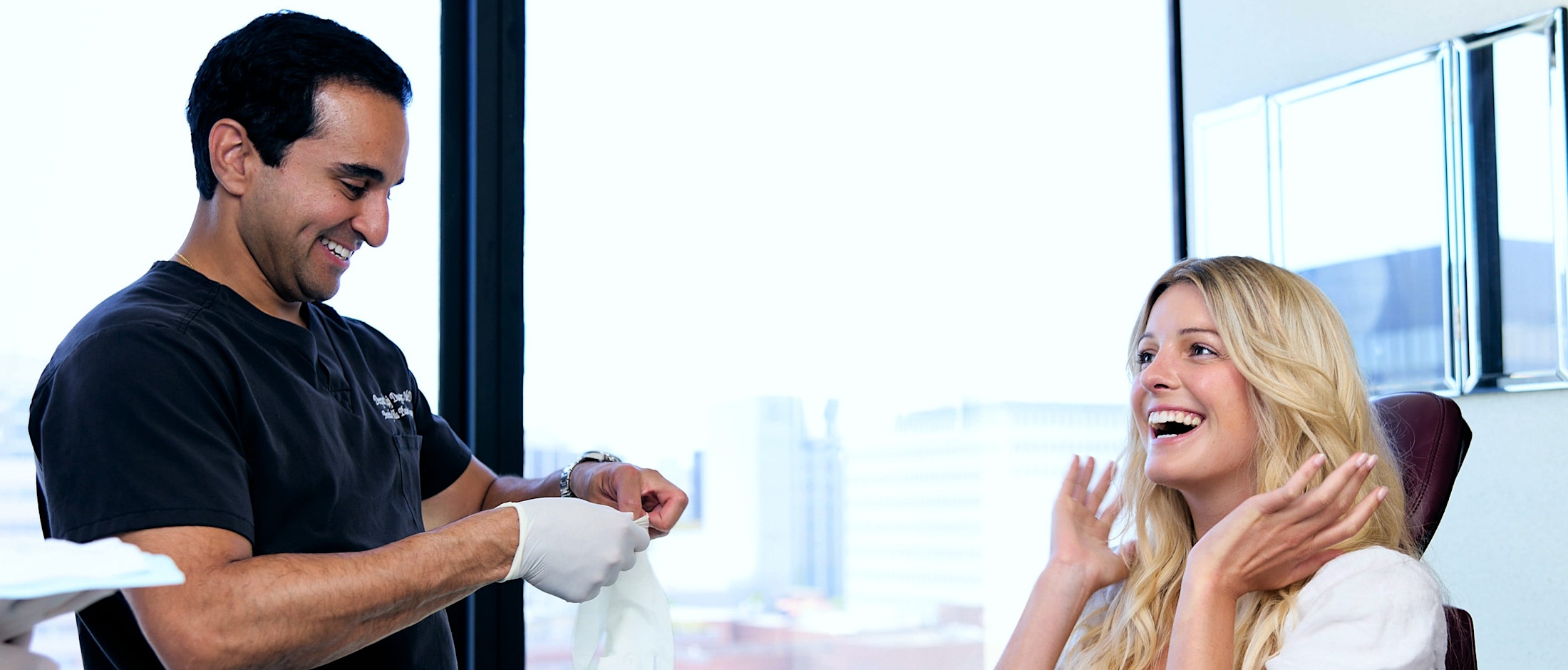
In a recent appearance on CBS LA Mornings, Beverly Hills closed rhinoplasty specialist Dr. Deepak Dugar addressed this emerging phenomenon, dissecting how AI photo manipulation creates dangerous illusions, promotes a bland facial homogeneity, and complicates the ethics of modern aesthetic consultations.
The Dangerous Illusion: “It’s Just My Face”
When an AI algorithm modifies your portrait, it creates an instant psychological hook. Because the core features remain recognizably yours, the edited result feels inherently personal, reachable, and realistic.
As Dr. Dugar highlights, this perception is often a complete illusion.
When you ask an AI tool to "make my nose smaller" or "soften my bridge," the software doesn't isolate cartilage or respect anatomical constraints. Instead, it makes 10 to 15 simultaneous micro-adjustments across your entire facial landscape:
- Skin texture is artificially smoothed.
- Cheekbones are gently repositioned.
- Upper lip ratios and philtrum lengths are tweaked.
- Eye openings and brow symmetry are optimized.
By the time you look at the final image, your mind credits the stunning new balance entirely to a "smaller nose," completely unaware that the background software subtly altered your entire skeletal framework to make that nose work.
Pixels Don't Bleed, Swell, or Heal
The fundamental flaw of using AI renderings as medical blueprints is simple: algorithms do not understand human biology.
A prompt operates on two-dimensional pixel clusters. It does not account for:
- Skin Thickness & Elasticity: Thin skin reveals every underlying edge; thick, sebaceous skin may not contract over a dramatically reduced nasal framework.
- Cartilage & Bone Architecture: A surgeon can only sculpt within the structural integrity of your nasal septum, lateral cartilages, and nasal bones.
- Blood Supply & Airway Function: A nose must breathe. Aggressive cosmetic changes rendered on a screen often compromise nasal valves in real life.
- The Healing Process: Healing involves scar tissue formation, swelling, and fluid retention that evolve over one to two years. AI simulates an instantaneous, poreless finish with zero recovery trajectory.
The Homogeneity Trap: Why Every Face Looks the Same
When millions of users funnel their selfies through neural networks trained on identical datasets of popular social media aesthetics, something paradoxical occurs: individuality disappears.
Dr. Dugar points out that AI beauty standards trend toward an algorithmically homogenized ideal—one that ends up looking surprisingly bland. By smoothing out every irregularity, character line, and distinct angle, AI strips away the very nuances that make a human face memorable.
True aesthetic artistry—especially within conservative approaches like closed "scarless" rhinoplasty—prioritizes balance, ethnic preservation, and subtle refinement. The goal is to enhance your existing beauty, not erase your heritage to fit a shared algorithm.
Ethics in the Consultation Room: When Surgeons Must Say "No"
With the barrier to digital perfection lower than ever, the ethical responsibility falls heavily on the surgeon.
A consultation should never be an order-taking transaction where a provider attempts to replicate an impossible AI render. Responsible facial surgeons spend as much time managing expectations and evaluating psychological readiness as they do planning operative steps. Often, the most ethical thing a surgeon can do is tell a patient that the digital portrait they brought in is surgically impossible—or that surgery isn't in their best interest at all.
Key Takeaway
Technology can be an inspiring, creative sandbox, but it is not a sterile operating room. If you are considering cosmetic surgery, step away from the generative filters. Seek out board-certified specialists who evaluate your physical anatomy, prioritize airway function, and celebrate the natural character of your face.
To hear Dr. Dugar break down the differences between digital filters and surgical reality firsthand, watch his full television interview in AI Plastic Surgery Photos: Why Every Face Looks the Same.
This broadcast interview on CBS LA Mornings features Dr. Deepak Dugar explaining how AI photo editors distort patient expectations and blur the line between digital illusions and real surgical outcomes.