Getting It Right the First Time

Deepak Dugar, MD is a double board-certified facial plastic surgeon and founder of the Beverly Hills Rhinoplasty Center, where every surgery follows one closed, scarless technique built to get a nose right the first time. Patients weighing their first rhinoplasty often assume a second surgery comes down to luck or anatomy. In most cases, it comes down to the approach chosen the first time. To understand how that approach can help lower your chances of needing a second procedure, schedule a private consultation with Dr. Dugar.

What Is Revision Rhinoplasty?

Revision rhinoplasty is any nasal surgery performed after an initial rhinoplasty. It corrects a result that didn't meet the patient's goals, or fixes a structural or breathing problem the first surgery caused. This is different from a primary procedure, which works with nasal tissue that has never been surgically altered. Revision surgery tends to be more technically demanding than a first-time procedure, since scar tissue, altered cartilage, and prior incisions change what a surgeon has to work with. More than 220,000 rhinoplasties are performed in the United States each year, and an estimated 50,000 of them are revisions, corrections made because the original surgery didn't hold up the way the patient expected.

Common Reasons Patients Seek Revision Rhinoplasty

A second surgery almost always traces back to specific problems created in the first one, most often:

  • A pinched nasal tip, caused when too much cartilage is removed or the tip loses its structural support
  • A "ski slope" profile, caused by over-removing cartilage and bone from the bridge
  • An overly upturned tip that looks artificial from certain angles
  • Visible external scarring left by an open surgical approach
  • Breathing problems that were never addressed, or were made worse, by the original surgery
Banner media

Does Dr. Dugar Perform Revision Rhinoplasty?

Beverly Hills Rhinoplasty Center is intentionally limited to one procedure: closed, Scarless Nose® Rhinoplasty performed on noses that have never been operated on before. Dr. Dugar does not perform revision rhinoplasty, and patients who have already had a prior nose surgery are not candidates for treatment at the atelier. Correcting an already-operated nose takes a different skill set than a primary procedure. Patients considering a second surgery are encouraged to find a surgeon who specializes in revision cases. What Dr. Dugar can offer instead is guidance before the first surgery, when the choices made have the greatest influence on whether a second procedure is ever needed.

How Closed Rhinoplasty Helps Lower the Likelihood of Revision Rhinoplasty

Dr. Dugar has performed more than 3,000 endonasal procedures and limits his practice to roughly 300 primary cases each year, a volume most rhinoplasty surgeons split across several other procedures. Because every incision stays inside the nose, the ligaments and support structures that keep a tip from collapsing or scooping over time remain intact. Losing that support is one of the main reasons revisions happen in the first place. This approach, outlined in full on the closed rhinoplasty and Scarless Nose® philosophy pages, is the foundation of every primary procedure performed at the atelier, and it's designed to help lower a patient's long-term chances of needing a second one.

Banner media

Why Choose Dr. Dugar for Your Primary Rhinoplasty?

Dr. Dugar is double board-certified by the American Board of Otolaryngology, Head and Neck Surgery and the American Board of Facial Plastic and Reconstructive Surgery, and he trained one-on-one as the final legacy fellow of Dr. Raj Kanodia's Advanced Closed Rhinoplasty Fellowship, an apprenticeship built entirely around this technique. He belongs to The Rhinoplasty Society, a distinction held by fewer than one percent of rhinoplasty surgeons worldwide, and he co-authored the chapter on endonasal technique in Master Techniques in Rhinoplasty, a textbook widely referenced in the field. That training underlies the primary-only approach built to help minimize a patient's long-term need for a second surgery.

Doctor media

Your Consultation

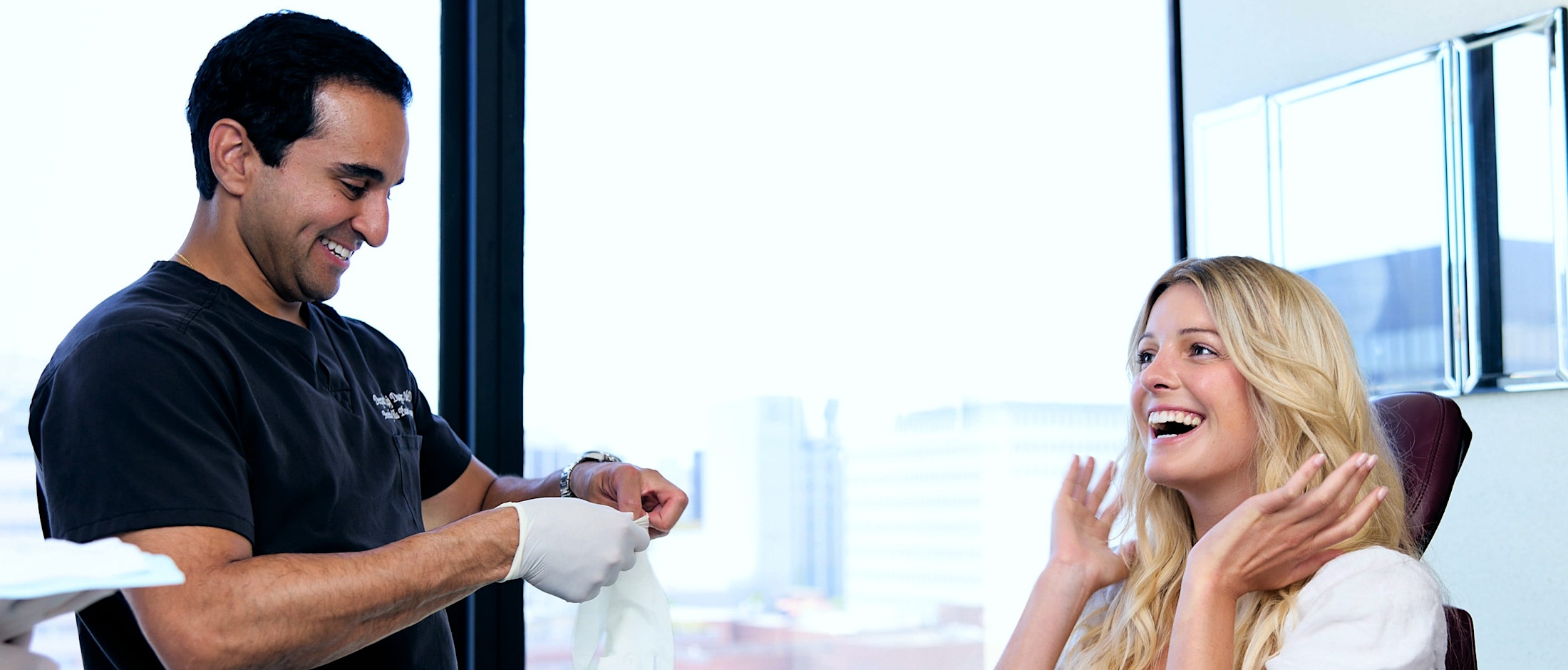
Dr. Dugar starts every consultation by examining the nose's internal breathing structure, then its external shape and balance with the face. He tells each patient directly whether they're a good candidate for primary closed rhinoplasty. Patients who've already had surgery, or whose anatomy calls for an open or reconstructive approach, are referred to the right specialist instead.

Revision Rhinoplasty FAQs

What are the risks of revision rhinoplasty?

How long should I wait before considering a revision rhinoplasty?

Is revision rhinoplasty more expensive than a primary procedure?

Can revision rhinoplasty correct breathing problems caused by a previous surgery?

Is there a consultation fee?

Can I have a virtual consultation if I live outside Los Angeles?

What photos do I need to provide before my consultation?

What are the risks of revision rhinoplasty?

Because revision surgery works with tissue that's already been altered by scarring and prior incisions, it generally carries more technical complexity and risk than a primary procedure. This is why Dr. Dugar's primary-only, closed rhinoplasty approach is designed to help patients avoid needing a second surgery, and the added risk that comes with it, in the first place.

How long should I wait before considering a revision rhinoplasty?

Most surgeons recommend waiting until the nose has fully healed from the original surgery, which can take a year or more depending on how much swelling and tissue change occurred. A surgeon who specializes in revision rhinoplasty can confirm the right timeline for your specific case.

Is revision rhinoplasty more expensive than a primary procedure?

It often is, mainly because of the added surgical complexity and operating time involved. Exact pricing depends on the surgeon and the specifics of the case, so a surgeon who specializes in revision rhinoplasty can provide an accurate estimate.

Can revision rhinoplasty correct breathing problems caused by a previous surgery?

In many cases, yes, depending on what caused the problem the first time. Because this falls outside the primary procedures performed at Beverly Hills Rhinoplasty Center, patients with breathing problems from a previous nasal surgery are referred to a surgeon who specializes in revision and functional nasal surgery.

Is there a consultation fee?

Yes. A consultation with Dr. Dugar is $500, which is non-refundable but applied as a deposit toward a future surgery if you qualify as a candidate. Follow-up re-evaluations aren't charged separately.

Can I have a virtual consultation if I live outside Los Angeles?

Yes. More than half of Dr. Dugar's patients travel from outside Los Angeles, and the practice offers virtual, pre-operative consultations conducted personally by Dr. Dugar for international and out-of-state patients, along with concierge scheduling support.

What photos do I need to provide before my consultation?

For a virtual consultation, Dr. Dugar's team requests a frontal view of the face and neck, left and right profile views (both smiling and at rest), and a base view with the head tilted back so the nasal cavity is visible.

Start With the Right Procedure

If you're planning your first rhinoplasty and want results that hold up for the long term, the best time to address that is before surgery, when the surgical approach is still a choice. Beverly Hills Rhinoplasty Center offers private consultations with Dr. Dugar for patients who want to understand how closed, scarless rhinoplasty can help lower their chances of ever needing a second one. Schedule a consultation to begin.


This information is provided for educational purposes only and does not replace a consultation with a board-certified facial plastic surgeon. Outcomes, risks, and candidacy vary from patient to patient.

Contact us media
Accessibility: If you are vision-impaired or have some other impairment covered by the Americans with Disabilities Act or a similar law, and you wish to discuss potential accommodations related to using this website, please contact our Accessibility Manager at (323) 207-1536.